Space in 2021

Updated: Jan 31, 2022
2021 might have been a year you spent in your room, but this year was spent thoroughly expanding the frontiers of space. We may have not gotten a YouTube ReWind this year, but we can give you a rundown of the top 5 moments that showcased our innovation on a more extraterrestrial level
Discovering Comet Bernardinelli-Bernstein
This was a comet discovered by graduate student Pedro Bernardinelli and cosmologist Gary Bernstein. Originally, Bernardinelli was looking through Dark Energy data to find objects that live beyond Neptune’s orbit when he detected something much farther than his initial point of study.
When he consulted with his advisor Gary, the twosome detected a comic almost 10 times wider and 1,000 times more massive than any comet known to science!
On top of its remarkable science, it had not approached the sun since Lucy; a hominid ancestor of ours walked the Earth almost 3 million years ago. A stroke of luck concluded that astronomers would only have to wait 10 years for this comet to approach the sun again, and they would be able to study its properties further. Who knows, maybe the pandemic would end by then.

Amateur astronomer discovers new moon around Jupiter
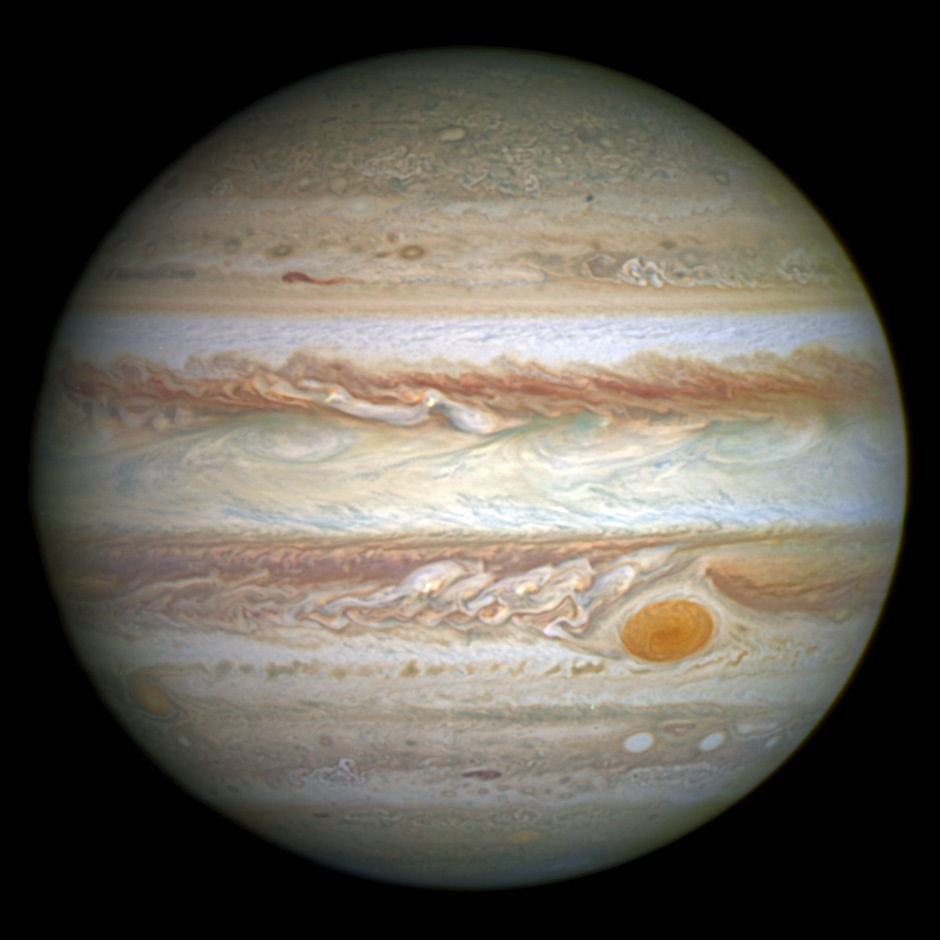
Jupiter is a giant with 79 moons; what’s one more? From studying the data set from 2003 collected by researchers using the 3.6-meter Canada-France-Hawaii Telescope on Mauna Kea, an amateur astronomer named Kai Ly concluded that there was evidence of a Jovian moon-bound to Jupiter’s gravity. Naming the moon the charming name of EJc0061, it was found that it belonged to the Carme group of Jovian moons and orbited opposite to Jupiter’s rotation at an extreme tilt with reference to Jupiter’s orbital plane.
A star munching ‘Pac-Man’ in the southern sky
Who knew video games would be so important in space? Located very near to us (just 163,000 light-years), in the Large Magellanic Cloud is N 63A; the product of a star collapsed under its own weight. The resulting remnants of superheated gas took on the shape of the beloved yellow eater; Pac-Man. The ‘power pellets’ sharing Pac-Man’s path are stars forged from the same gas as N 63A.

Parker Solar Probe
Yes, we’ve done it. Humanity has launched itself to the sun, well we’ve launched a probe, but that's close enough! Parker Solar Probe was a spacecraft launched 3 years ago and its goal was to make repeated, ever closer passes to the sun. The spacecraft moves at the breakneck speed of over 500,000 km/h (320,000 mph). The strategy is to get in quick and get out quick, making measurements of the solar environment with a suite of instruments deployed from behind a thick heat shield.
On 28th April, the craft crossed into the Alfven critical boundary, which is the outer edge of the corona. It is also the point where solar material is normally bound to the Sun by gravity and magnetic forces break free to stream out across space. This is a monumental achievement and can help us study the properties of the sun even better.

The sun reawakens
The sun likes to sleep too, that is to say, that for approximately a decade long cycle, the behemoth star was in its quiet phase. But now the surface of the star is erupting in powerful events, spewing out charged particles towards Earth. In early November, these little outbursts resulted in a large geomagnetic storm on our planet.
The eruption is termed Colossal Mass Ejection (CME); essentially a billion-ton cloud of solar material with magnetic fields, and when this bubble pops, it blasts a stream of energetic particles out into the solar system. If this material heads in the direction of Earth, it interacts with the planet's own magnetic field and causes disturbances. Sometimes those disturbances are beautiful; like the ethereal auroras near Earth’s poles and other times they include fun things like energy losses and satellite disruptions.

Sources:
https://www.space.com/biggest-space-discoveries-stories-2021
https://www.livescience.com/10-awesome-space-structures-2021
https://www.bbc.com/news/science-environment-59661827

Comments